Ever wonder why one glaze runs, another crawls, and a third somehow comes out looking exactly like a melted traffic cone? In this class, we’ll explore the science behind ceramic glazes in a practical, potter-friendly way. Taught by a ceramic engineer (yes, that used to be a real engineering degree program despite NCEES saying otherwise), we’ll cover what common glaze ingredients do, how glazes melt, and how to make informed adjustments to get the results you want.
Don’t worry—there will be some chemistry and a little math, but only enough to be dangerous. If you start seeing calculus or ternary phase diagrams, just smack the instructor in the head. Whether you’re a beginner looking to understand your materials or an experienced potter wanting more control over your glazes, this class will help demystify the magical goo that turns into glass in your kiln.
You will make a small batch of your own glaze, from scratch, and we’ll fire it to see what happens.
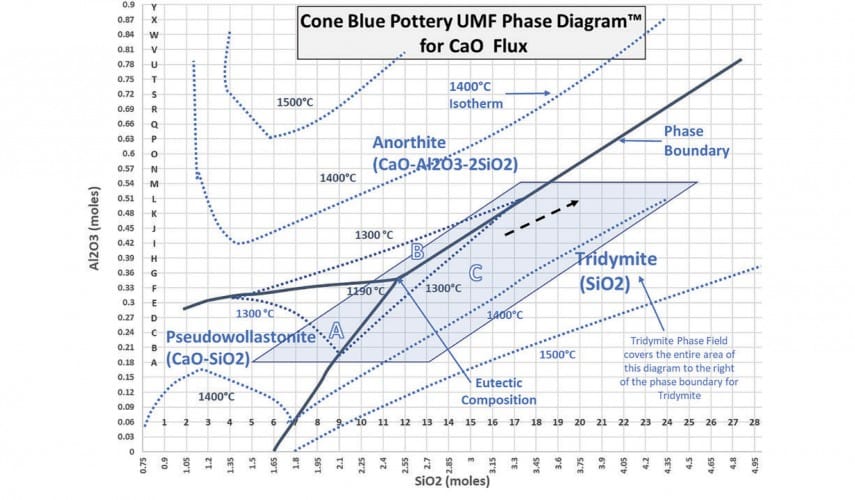
If you’re curious, the phase diagram in the image is from this publication: Cone Blue Pottery